
Posted October 5, 2026 by Gerry Litchfield
Have you ever moved a rug or sofa and discovered that the wooden floor underneath is a noticeably different colour? Sunlight is often part of the reason.
Wood is a natural material, so its colour can gradually change with exposure to light and as the timber ages. Areas hidden beneath rugs and furniture receive less exposure, potentially leaving obvious outlines or “tan lines”.
You cannot completely prevent natural wood from changing colour, but you can reduce uneven exposure, maintain the protective finish and take action before the difference becomes more noticeable.
UV radiation contributes to changes in wood, but it is not the only factor. Visible light and the natural ageing and oxidation of timber can also affect its appearance.
Importantly, not every wooden floor simply becomes lighter. Depending on the species, finish and age, timber can lighten, darken or develop warmer tones.
How noticeable the change becomes can depend on:
This is why two wooden floors in similarly sunny rooms can change differently.
Tan lines usually develop because different sections of the floor receive different amounts of light.
For example, a rug left in the same position for several years shields the timber underneath while the surrounding floor continues to age and respond to daylight. Once the rug is moved, the difference can become obvious.
The same effect can occur beneath sofas, cabinets, plant pots and other objects that remain in one place for long periods.
South-facing rooms and spaces with large windows or glazed doors can be particularly worth monitoring during bright summer months.
No treatment should be considered completely UV-proof.
Professional wood-floor finishes are available with UV-resistant or UV-protective properties that can help reduce certain effects of sunlight, but they cannot permanently stop natural timber from changing colour.
The appropriate finish depends on the type of wood, its existing treatment, the desired appearance and how the room is used.
If your floor receives significant sunlight, a flooring specialist can assess the existing surface and recommend an appropriate finishing or wooden floor maintenance treatment.
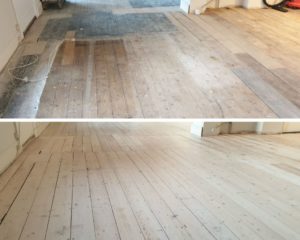
A few practical habits can reduce the risk of sharp colour differences developing.
Avoid leaving rugs permanently in exactly the same position in sunny rooms. Moving or temporarily removing them allows previously covered sections to receive more similar light exposure.
Curtains and blinds can help reduce prolonged direct sunlight during the brightest parts of the day without keeping the room permanently dark.
Regular maintenance helps keep the protective surface in good condition. If the finish has become worn or damaged, it is worth having the floor assessed before deterioration becomes more extensive.
Summer is a useful time to lift rugs and inspect areas underneath furniture. Spotting developing colour differences early gives you more opportunity to manage exposure before the contrast becomes severe.
Sometimes the appearance can be improved, but there is no universal quick fix.
After a rug or piece of furniture is moved, the previously covered timber may gradually change as it receives more light. However, there is no guarantee that it will eventually become an exact match for the surrounding floor.
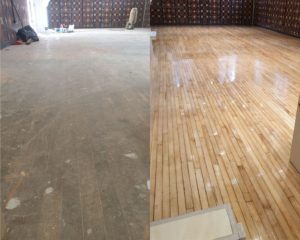
Where the colour difference is substantial, professional sanding and refinishing may be appropriate. Sanding removes the worn surface before a new protective finish is applied, potentially creating a more consistent appearance.
Whether this is suitable depends on the floor. Engineered wooden flooring, for example, has a limited timber wear layer, so it cannot automatically be treated in the same way as every solid wooden floor.
For noticeable discolouration, it is sensible to have the floor assessed before attempting to sand or stain an individual patch.
Sun-related colour differences do not necessarily mean a floor needs complete renovation.
Professional floor sanding and polishing may be worth considering where uneven colour appears alongside:
Treating a small faded patch in isolation can sometimes make the difference more obvious, so the condition of the whole floor should be considered first.
With approximately 25 years in the flooring industry, Dominic knows that visible fading is only part of the picture. Before recommending maintenance or refinishing, he considers the type and condition of the timber, the existing finish, previous sanding and the extent of the colour difference.
This is particularly important with engineered wood, where the available wear layer can limit how much material can safely be removed. Taking the time to assess the floor properly helps determine whether it needs simple maintenance, professional sanding and refinishing, or whether the best approach is to manage the light exposure and allow the timber to continue ageing naturally.
No. Different woods react differently to light and ageing. Some may become lighter, while others can darken or develop warmer tones.
No. A suitable professional finish may help reduce certain effects of sunlight, but natural timber will still change with light exposure and age.
They may become less noticeable after the covered area is exposed to light, but there is no guarantee that it will eventually match the surrounding timber exactly.
Potentially. Whether sanding is suitable depends on the construction, condition and previous treatment of the floor. Engineered floors require particular care because their usable timber layer may be limited.
If moving a rug or furniture has revealed noticeable colour differences, avoid assuming that replacement is necessary. Depending on the condition of the floor, the appropriate solution could range from managing future sunlight exposure to maintenance, sanding and professional refinishing.
Litchfield Floor Renovations has been established for around 20 years, with Dominic bringing approximately 25 years of flooring industry experience.
If you would like advice on a faded or uneven wooden floor, explore Litchfield Floor Renovations’ wooden floor maintenance and restoration service or call 01525 220286 to discuss the condition of your flooring.

With over 15 years’ experience in the industry, we work to the highest possible principles and deliver supreme standards of workmanship for our many customers. We work on any type of project, whether it’s a domestic floor that needs restoring or commercial floor sanding and refurbishing, we are sure to provide you with the best end result… read more >>
© 2020 LFR - Litchfield Floor Renovations.
